
Key takeaways
- Social media reach is rented; email and messaging lists are yours — they reach customers directly.
- WhatsApp passed 3 billion monthly users in 2025 (Meta), and the WhatsApp Business app is free for small businesses.
- In the UK and EU you generally need consent to send marketing emails or messages, with a limited “soft opt-in” for existing customers.
- Send useful, occasional messages — offers, news, reminders, events — never spam.
- Every marketing message needs an easy way to opt out.
A follower on Instagram might see one in ten of your posts. A customer on your email or WhatsApp list sees your message in their inbox. That’s why the most successful local businesses build their own lists and use them well — not to bombard people, but to bring regulars back and fill quiet days. This guide covers both channels and the rules you need to follow.
Why owning your audience matters
- Direct reach — no algorithm deciding who sees it.
- Higher intent — people on your list already know and like you.
- Lower cost — once the list exists, each message costs little or nothing.
- Resilience — if a social account is hacked or a platform changes, you can still reach your customers.
WhatsApp for business
Meta reported that WhatsApp passed 3 billion monthly active users in April 2025, and in much of Europe it’s the default way people message each other. For a small business there are two options:
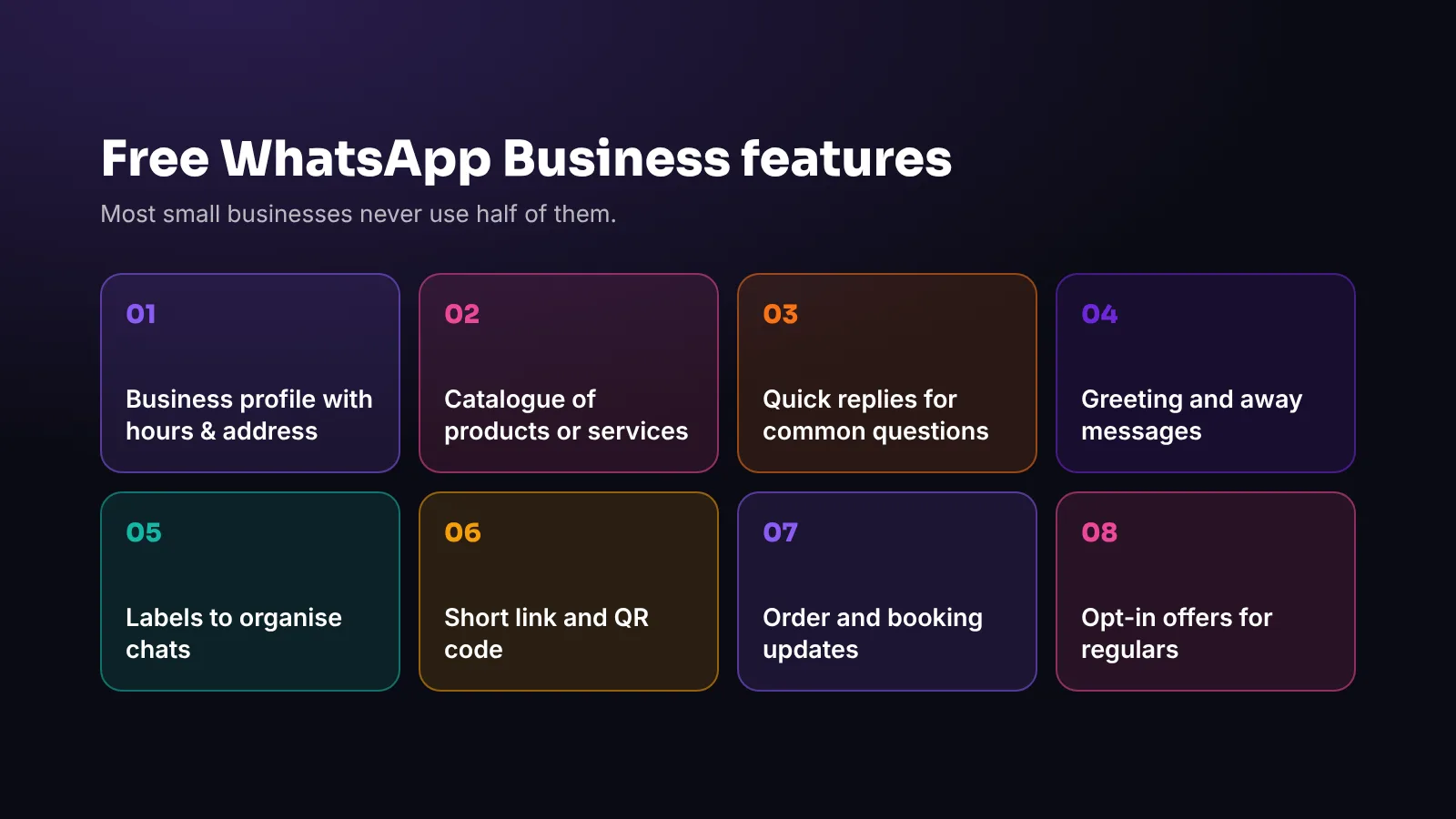
- WhatsApp Business app — free, on a phone. It gives you a business profile (address, hours, website), a product or service catalogue, quick replies, greeting and away messages, labels to organise chats and a short link or QR code customers can use to message you.
- WhatsApp Business Platform (API) — for larger volumes, automations, chatbots and multiple team members, through an approved provider. Business-initiated messages are charged by Meta according to category and country.
Great uses for local businesses:
- Booking and order confirmations, reminders and changes
- Answering questions quickly (with quick replies)
- Sharing the catalogue or menu
- “Your order is ready” and “table available” updates
- Occasional offers to customers who’ve opted in
Keep it human: WhatsApp feels personal. Short, friendly, relevant messages work; long promotional blasts don’t.
Email marketing
Email remains one of the most effective ways to bring customers back, especially for shops, hospitality, salons and services with repeat visits.
What to send:
- A monthly newsletter: new products or menu, upcoming events, one offer, one story
- Seasonal campaigns: Christmas, Valentine’s, summer, back to school
- Automated emails: welcome, birthday, “we miss you”, review request after a visit
- Event invitations and early access for regulars
How often: once or twice a month suits most local businesses. Consistency matters more than frequency.
Make it work:
- A clear subject line that says what’s inside
- One main message and one button
- Real photos, short text, mobile-friendly design
- Send at times your customers read — test mornings vs evenings
Building your list (the right way)
- At the till or booking: “Would you like our monthly news and offers?” — with a clear tick box or form.
- On your website: a simple sign-up form with a reason to join (first-visit offer, early access).
- On social media: a link in bio and occasional reminders.
- QR codes on tables, receipts and packaging that open a sign-up form or WhatsApp chat.
- Never buy lists. It’s generally unlawful and it damages your reputation and deliverability.
The rules: consent and the soft opt-in
This is general information, not legal advice.
- UK: the Privacy and Electronic Communications Regulations (PECR) require consent for marketing emails and texts to individuals, with an exception known as the soft opt-in: you can market to existing customers (or people who negotiated a purchase) about your similar products and services, if they were given a clear chance to opt out when you collected their details and in every message since. The Data (Use and Access) Act 2025 raises maximum PECR fines to UK GDPR levels — up to £17.5 million or 4% of global turnover.
- EU: the ePrivacy Directive, implemented in each country, sets similar rules, including a similar exception for existing customers. National details differ, so check your country’s guidance.
- GDPR: in both the UK and EU, keep records of consent, explain how you use data in your privacy notice and honour unsubscribe requests promptly.
- WhatsApp: Meta’s own policies require that people have opted in to receive messages from your business, and they can block or report you — another reason to message only people who want to hear from you.
Simple automations that pay off
- Welcome message when someone joins — with a small thank-you.
- Review request a day after a visit or delivery (see how to get more Google reviews).
- Birthday offer for those who shared a birthday.
- Win-back after three months without a visit.
- Booking reminders the day before an appointment.
See AI automation for small businesses for more.
What to measure
- List growth each month
- Open and click rates (email) and reply rates (WhatsApp)
- Unsubscribes and blocks — a spike means messages are too frequent or not relevant
- Redemptions and bookings from each message — the number that matters
Frequently asked questions
Is WhatsApp Business free?
The WhatsApp Business app is free to download and use. The WhatsApp Business Platform (API), used for larger volumes and automation, charges for business-initiated messages according to type and country.
Do I need consent to send marketing emails?
In the UK and EU you generally need consent to send marketing emails to individuals. A limited soft opt-in allows marketing similar products and services to existing customers who were given a clear chance to opt out.
How often should a local business send emails?
Once or twice a month is a good rhythm for most local businesses, plus automated messages such as welcome, birthday and review requests.
Can I add my customers’ phone numbers to a WhatsApp broadcast?
Only people who have agreed to receive messages from you should get marketing messages. Ask for opt-in, explain what they’ll receive and make it easy to stop.
What should I put in a newsletter?
One main message — an offer, new product, event or story — with real photos, a clear button and short text. Keep it relevant and mobile-friendly.
The bottom line
Build a list you own, ask permission, send occasional messages people are glad to get and make leaving easy. It’s the most reliable way to turn one-off customers into regulars.
Viraluna’s social media plans keep your followers growing, and Viraluna Studio can set up email, WhatsApp and automations around them. See our plans or explore AI and automation.